
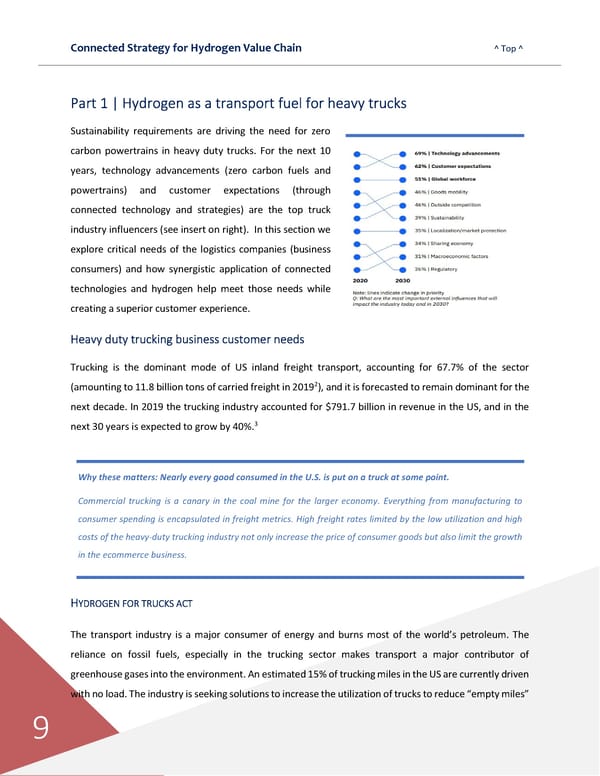
Connected Strategy for Hydrogen Value Chain ^ Top ^ 9 Part 1 | Hydrogen as a transport fuel for heavy trucks Sustainability requirements are driving the need for zero carbon powertrains in heavy duty trucks. For the next 10 years, technology advancements (zero carbon fuels and powertrains) and customer expectations (through connected technology and strategies) are the top truck industry influencers (see insert on right). In this section we explore critical needs of the logistics companies (business consumers) and how synergistic application of connected technologies and hydrogen help meet those needs while creating a superior customer experience. Heavy duty trucking business customer needs Trucking is the dominant mode of US inland freight transport, accounting for 67.7% of the sector (amounting to 11.8 billion tons of carried freight in 20192), and it is forecasted to remain dominant for the next decade. In 2019 the trucking industry accounted for $791.7 billion in revenue in the US, and in the next 30 years is expected to grow by 40%.3 HYDROGEN FOR TRUCKS ACT The transport industry is a major consumer of energy and burns most of the world’s petroleum. The reliance on fossil fuels, especially in the trucking sector makes transport a major contributor of greenhouse gases into the environment. An estimated 15% of trucking miles in the US are currently driven with no load. The industry is seeking solutions to increase the utilization of trucks to reduce “empty miles” Why these matters: Nearly every good consumed in the U.S. is put on a truck at some point. Commercial trucking is a canary in the coal mine for the larger economy. Everything from manufacturing to consumer spending is encapsulated in freight metrics. High freight rates limited by the low utilization and high costs of the heavy-duty trucking industry not only increase the price of consumer goods but also limit the growth in the ecommerce business.
 Connected Strategies for the Hydrogen Value Chain Page 9 Page 11