
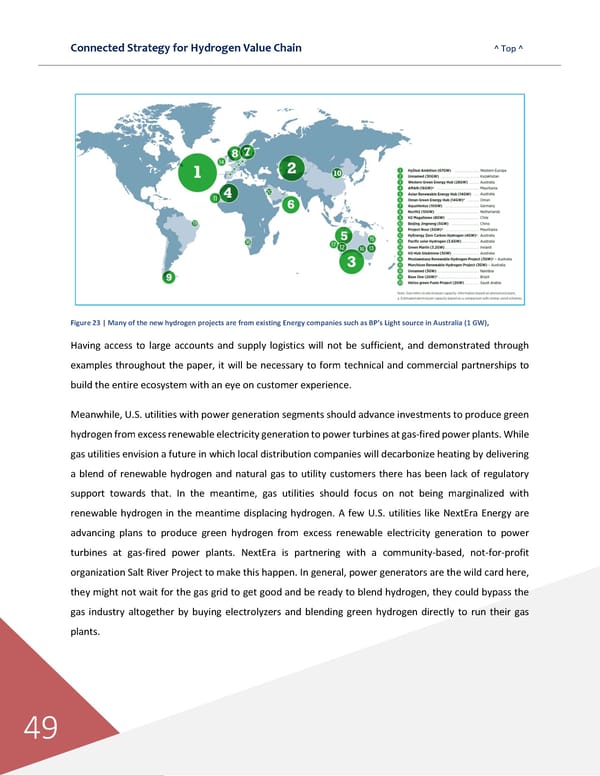
Connected Strategy for Hydrogen Value Chain ^ Top ^ 49 Figure 23 | Many of the new hydrogen projects are from existing Energy companies such as BP’s Light source in Australia (1 GW), Having access to large accounts and supply logistics will not be sufficient, and demonstrated through examples throughout the paper, it will be necessary to form technical and commercial partnerships to build the entire ecosystem with an eye on customer experience. Meanwhile, U.S. utilities with power generation segments should advance investments to produce green hydrogen from excess renewable electricity generation to power turbines at gas-fired power plants. While gas utilities envision a future in which local distribution companies will decarbonize heating by delivering a blend of renewable hydrogen and natural gas to utility customers there has been lack of regulatory support towards that. In the meantime, gas utilities should focus on not being marginalized with renewable hydrogen in the meantime displacing hydrogen. A few U.S. utilities like NextEra Energy are advancing plans to produce green hydrogen from excess renewable electricity generation to power turbines at gas-fired power plants. NextEra is partnering with a community-based, not-for-profit organization Salt River Project to make this happen. In general, power generators are the wild card here, they might not wait for the gas grid to get good and be ready to blend hydrogen, they could bypass the gas industry altogether by buying electrolyzers and blending green hydrogen directly to run their gas plants.
 Connected Strategies for the Hydrogen Value Chain Page 49 Page 51